|
Once viewed as the domain of cave-dwelling hermits, meditation has
shaken off its mysterious trappings and joined the ranks of respected
relaxation techniques. Because of its effectiveness, meditation practice
is included in many disease-treatment and stress-reduction programs.
Meditation affects both body and mind. By relieving stress, meditation
lowers the level of harmful stress hormones that inhibit immune function
and interfere with our natural healing processes. And by increasing
body-mind relaxation, it eases the pain created by panic and fear.
While there are many varieties of meditation, most include the following elements:
A quiet environment.
Reduce the distraction potential of your meditation environment as much
as possible. Choose a time when you will not be interrupted, turn off
the telephone and post a sign on the door. If you have a roommate or
family, find a time when they will respect your need to practice, and not
need to disturb you. A truly silent environment is often impossible. No
problem! Background noises are part of real life, and meditation must
take place despite real life. Learning to meditate with some background
noise is valuable practice.
A comfortable position.
While lying down is permitted for some relaxation exercises, meditators
find the position too suggestive of sleep. A sitting posture produces a
more alert mental state. Your sitting position should be as comfortable
as possible, and one you can maintain for at least 10 minutes to begin
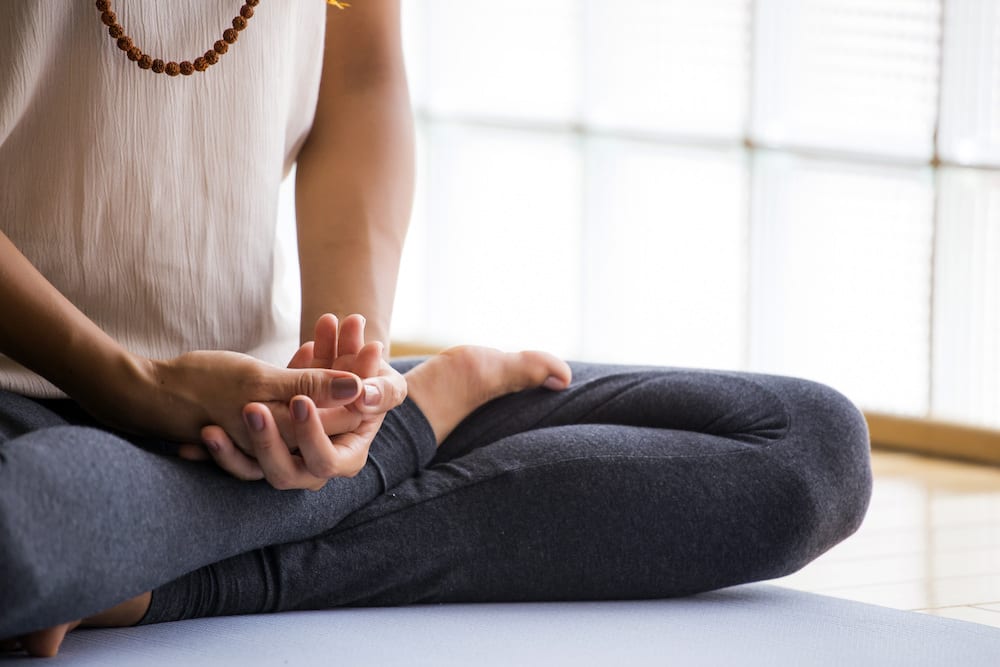
with. Sitting with a straight back, cross-legged on the floor, or
sitting in a chair, presents the best musculoskeletal balance, with no
one muscle group being made to take all the antigravity stress. During
meditation, you may either close your eyes or keep them focused on a
point in front of you.
A mental focus.
Beginning meditators often use one word or phrase to repeat with each
exhalation. Try a suggestive word or phrase like "relax," "peace" or
"let go." A short line or phrase from a favorite prayer or poem works
well. The word or phrase should help you feel safe, secure and relaxed.
Phrases that help you feel connected to a deeper reality than daily life
can help you achieve feelings of transcendence. Transcendence is a grand
word for a reachable experience. When you transcend your daily "normal"
state of mind, you step outside of the daily grind. You may glimpse a
sense of the larger picture, perhaps even a connection to a larger
spiritual reality. Whether or not you believe in a god or spiritual
power, you at least feel as though you are part of the continuum of
history, the web of humanity and life on earth. And if the idea of
transcendence is not relevant to your present experience, read on!
Relaxation benefits are still yours to enjoy.
Physical relaxation and calm breathing.
Meditation practice often begins with a minute or two of physical
relaxation and breathing awareness. A quick body scan and a few deep
breaths lower physiological arousal and bring your awareness into the
present moment.
Passive attitude.
Simply observe with a non judging awareness what is occurring. The
harder you try, the more tense you get. When your mind starts to wander,
simply bring your attention back to your focus, without judgement,
scolding or frustration.
Regular practice.
Like everything, meditation gets easier with practice. Practice is
essential for the realization of meditation's benefits. If you are new
to meditation, start with one 10-minute session per day, gradually
increasing the time to 15 or 20 minutes when you are ready. How will you
know when the time is up? Setting an alarm ruins your relaxation. Keep
a clock within reach of your peripheral vision, and sneak a glance at it
periodically.
Why not give meditation a try? Here is a summary of the instructions
above:
1) Pick a focus word or phrase.
2) Sit quietly in a comfortable position.
3) Close your eyes, or focus them on a point in front of you.
4) Relax your muscles.
5) Become aware of your breathing, letting the breath come slowly and naturally. Repeat your word or phrase as you exhale.
6) Maintain a passive attitude.
7) Continue for 10 to 20 minutes.
And the main benefits to remember about meditation are that it lowers your stress level and increases overall mind-body relaxation!
|